What is equity and why you should care as a tech lead
As you advance in your career as a software engineer, it's common to feel stuck. You don't know where to go next. Maybe you're at a small startup that just raised some funding and people start throwing around terms like equity, vesting, cliff, and dilution.
I am in that exact position.
My story
I am a tech lead at a startup that has just raised $500,000. My salary is around $4,000 per month, which is already good for the Brazilian market. The founders offered me a raise.
Instead, I asked for equity.
This decision forced me to actually understand how startups work. What are stock options? How does vesting work? What happens if the company fails or gets acquired?
I spent weeks researching. Here's what I learned.
What is equity
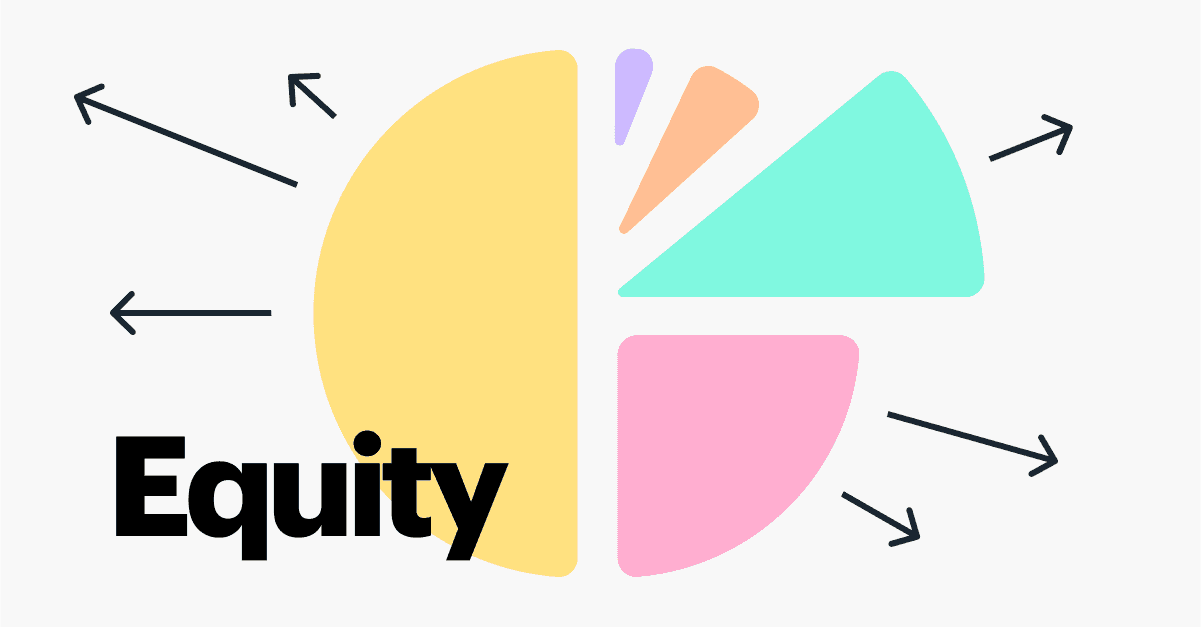
Equity is ownership in a company. When you receive equity as part of your compensation, you're getting a piece of the business.
For startups, this usually comes in the form of stock options. You're not getting actual shares immediately. You're getting the option to buy shares at a fixed price (the strike price) in the future.
The idea is simple: if the company grows and becomes valuable, your options let you buy shares at the old, lower price. You can then sell them at the current, higher price. The difference is your profit.
If the company fails or never grows, your options are worth nothing.
How vesting works
You don't get all your equity at once. It vests over time, usually four years.
A typical vesting schedule looks like this:
- Cliff: You get nothing for the first year. If you leave before 12 months, you walk away with zero equity.
- Monthly or quarterly vesting: After the cliff, your equity vests gradually. If you have 10,000 options over 4 years with a 1-year cliff, you get 2,500 after year one, then roughly 208 per month after that.
This protects the company from people who join, grab equity, and leave immediately.
What equity is actually worth
Here's the uncomfortable truth: most startup equity is worth nothing.
The majority of startups fail. Even if they succeed, your equity gets diluted with every funding round. That 1% you negotiated at seed stage might be 0.3% by Series B.
To understand what your equity might be worth, you need to know:
- The company's current valuation: If the company is valued at $5 million and you own 0.5%, your stake is theoretically worth $25,000.
- The strike price: How much do you have to pay to exercise your options?
- Liquidation preferences: In many exits, investors get paid first. Sometimes there's nothing left for common shareholders.
- Dilution: How much funding does the company plan to raise? Each round shrinks your percentage.
Don't treat equity as guaranteed money. Treat it as a lottery ticket with better odds than usual.
What you should watch out for
Get everything in writing. I've seen engineers work for years believing they had equity, only to discover there was no signed agreement. No document, no equity.
Understand your vesting schedule. Know your cliff date. Know when each chunk vests. Track it yourself.
Ask about the cap table. How much of the company do employees own in total? If it's less than 10%, that's a red flag. It means the founders aren't sharing much.
Know your strike price. If you have to pay $10,000 to exercise your options, that changes the math significantly.
Check the exit scenarios. Ask what happens if the company sells for $10 million, $50 million, or $100 million. Many option grants have clauses that can surprise you.
Understand the tax implications. In some countries, you owe taxes when you exercise, not when you sell. This can create a cash flow problem.
When to negotiate equity
Equity makes sense when:
- You believe in the company's potential
- You can afford to take a lower salary in exchange
- You're joining early enough that your percentage is meaningful
- You plan to stay long enough to vest a significant amount
Equity doesn't make sense when:
- You need every dollar of salary to pay bills
- The company has no clear path to an exit
- You're joining late and the percentage is tiny
- The founders are shady about sharing cap table information
In my case, I am already comfortable with my salary. Taking equity instead of a raise is a bet I can afford to make.
Where to learn more
Y Combinator has published a ton of free resources about startup equity, fundraising, and how the ecosystem works. Their library is the best place to start if you want to understand this world.
A few specific resources:
- YC's guide to equity compensation
- The Holloway Guide to Equity Compensation (free to read online)
- YC's job board (Work at a Startup) is also a good place to find startup jobs and connect with founders
Understanding equity is changing how I evaluate opportunities. It's not just about salary anymore. It's about understanding the whole picture: cash, equity, risk, and potential upside.
The bottom line
Equity is not free money. It's a bet on a company's future, paid for with your time and sometimes your salary.
As a tech lead, you're in a position to negotiate. But negotiate from knowledge, not hope. Understand what you're getting, what it's worth, and what could go wrong.
The worst outcome isn't equity that ends up worthless. It's spending years at a company thinking you own something you don't.
Get it in writing. Track your vesting. Understand the math. Then make your decision.